Last Updated on 8. October 2026 by SuffocationLink status: OK
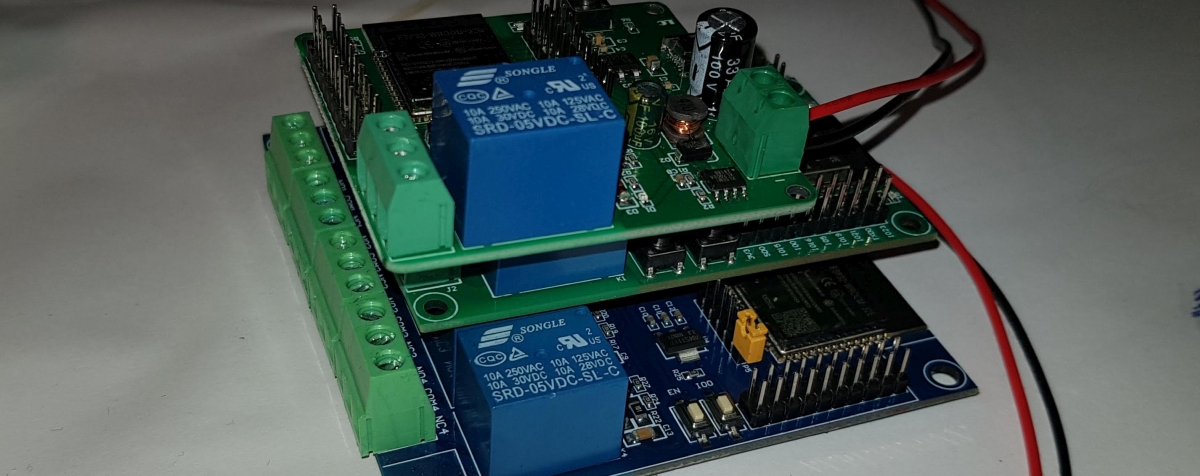
Für ein anderes Projekt brauchte ich Relais, um ein paar Pumpen schalten zu können. Hierbei sind die ESP32-Platinen beim schnellen Ali aufgefallen. Diese kommen komplett verwendbar daher und haben zum Teil sogar eine 240V-Stromversorgung mit on Board.
ACHTUNG: Der Programmierport auf den Boards ist zwar mit 5V ausgewiesen, der Umstand, dass meine Platinen aber nur einmal programmierbar waren, lässt mich darauf schließen, dass die 5V nur die Versorgungsspannung sind und die Datenleitungen nur mit 3V arbeiten. Zum Glück hatte ich beim ersten Versuch OTA aufgespielt. Ich werde dennoch mal schauen, ob ich den ESP auf einem Board ersetze.
Facts
| Description | Board 1 Relay Programmer | 1 Relay + Power Supply | 4 Relays + Power Supply |
| Versorgungsspannung DC | 5V-60V | 5V-30V | |
| Versorgungsspannung AC | – | 90V-250V | 240V |
| Controller | ESP32-Wroom-32E | ESP32-Wroom-32E | ESP32-Wroom-32E |
| Switch | 1 | 1 | 4 |
| Relay coil voltage | 5V | 5V | 5V |
| Relais Kontakt Spannung Max | 30V DC 250V ac | 30V DC 250V ac | 30V DC 250V ac |
| Maximum relay current | 10A | 10A | 10A |
| Relay Contacts | NC/COM/NO* | NC/COM/NO* | NC/COM/NO* |
| USB Port | Micro USB | – | – |
| Size | 57.5mm x 53.7mm |
Normal Closed/ Supply Voltage/ Normal Open
| Description | 1 Rel. Board | 2 Rel. Board | 4 Rel. Board | 8 Rel. Board | |
| Relay 1 | 16 | ? | 32 | ? | |
| Relais 2 | – | ? | 33 | ? | |
| Relay 3 | – | – | 25 | ? | |
| Relay 4 | – | – | 26 | ? | |
| Relay 5 | – | – | – | ? | |
| Relay 6 | – | – | – | ? | |
| Relay 7 | – | – | – | ? | |
| Relay 8 | – | – | – | ? | |
| LED | 23 | 23 | 23 | 23 |
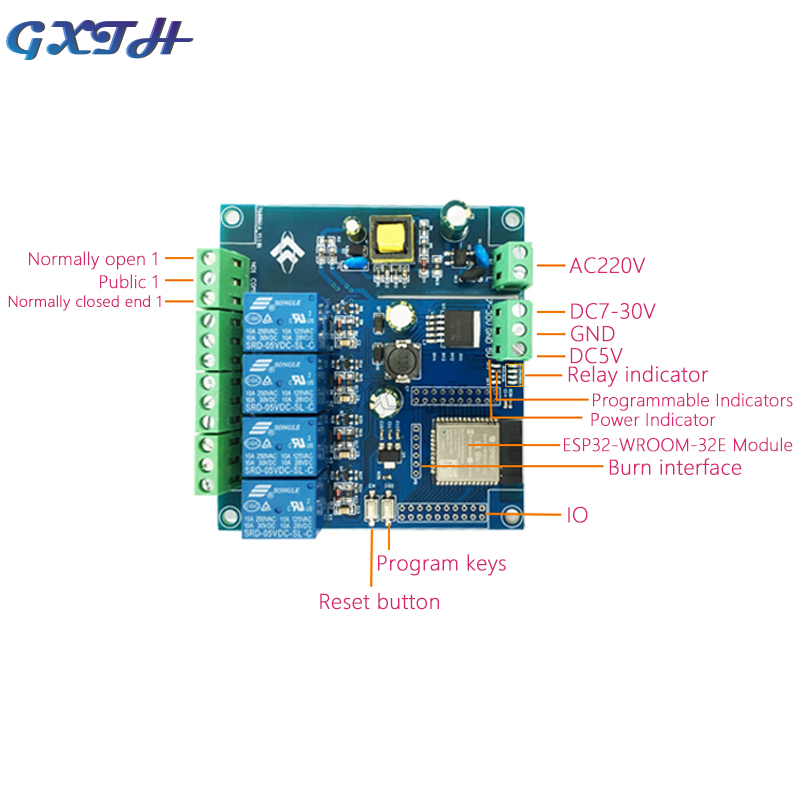
Areas of application
- Grundsätzlich, wenn andere Spannungen geschaltet werden müssen.
- Lichtszenen schalten
- Pumpensteuerung bei Bewässerung
- Lüfter schalten, z.B. bei Kellertrockenlegung
- ….
Views
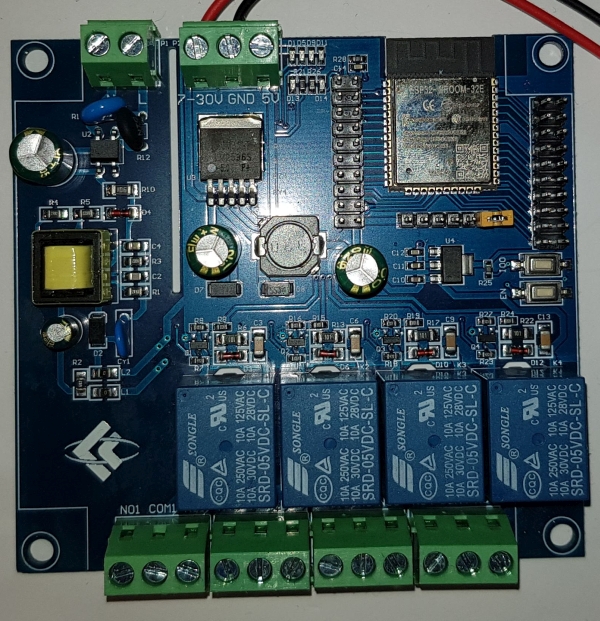
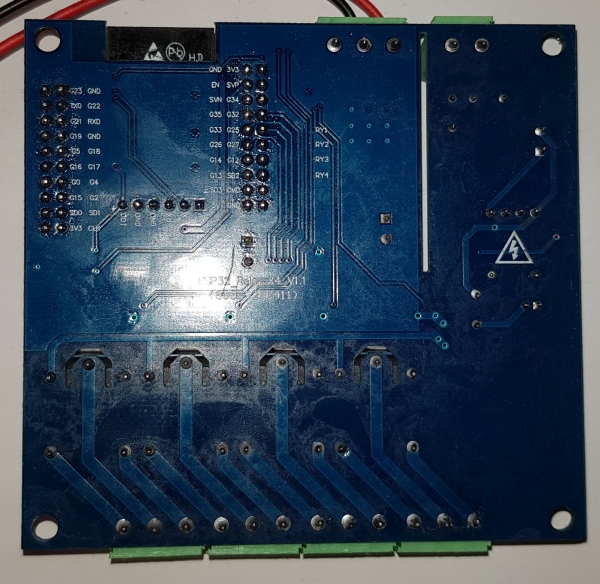
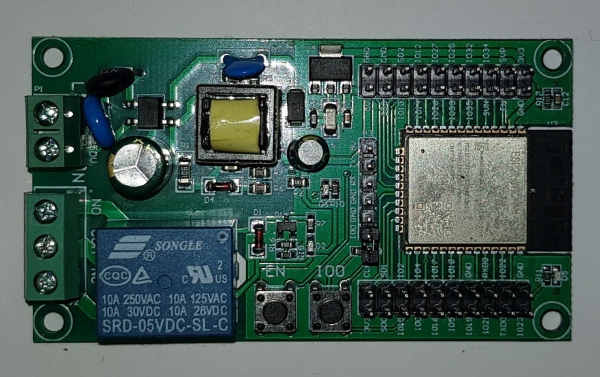
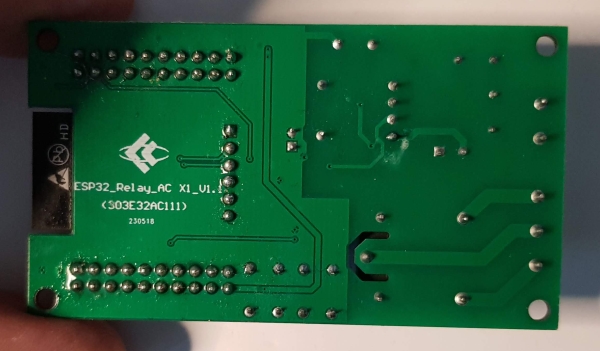
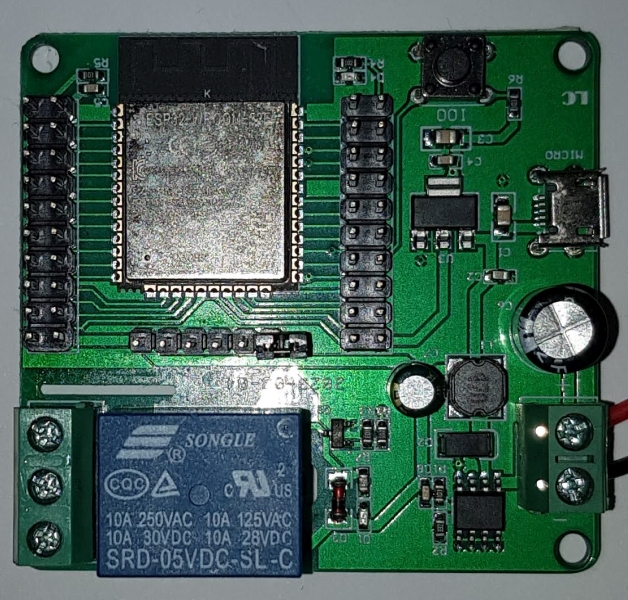
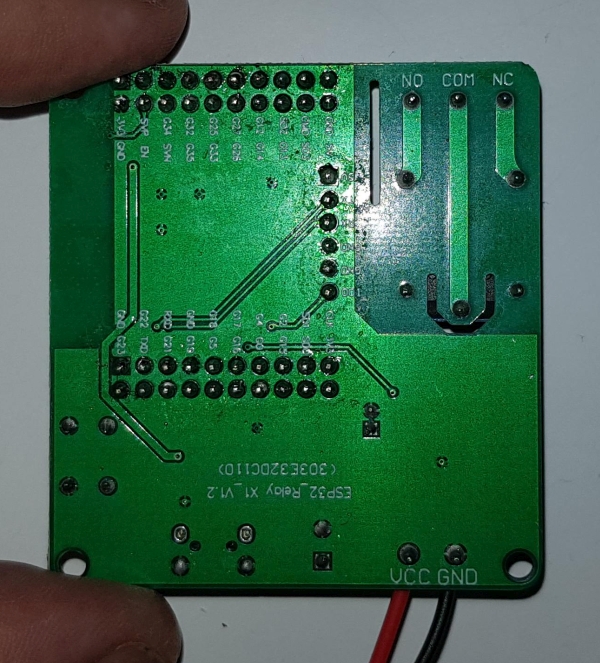
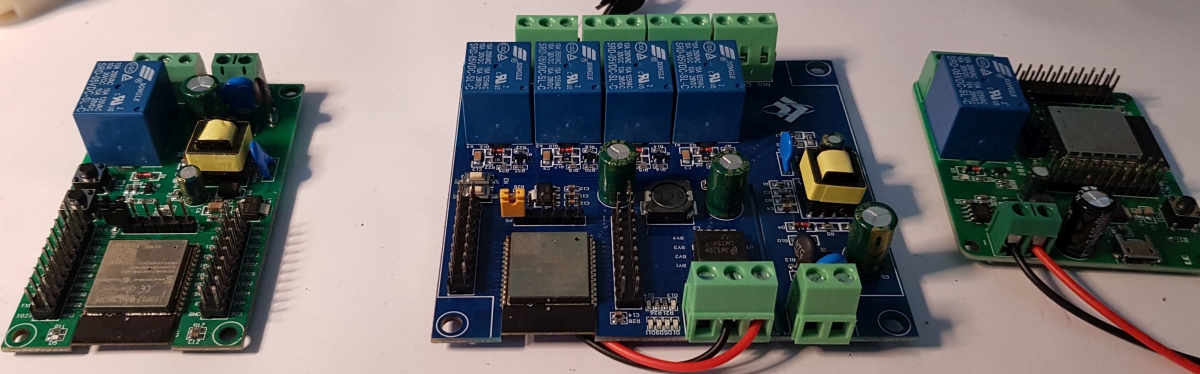
Programming
Libraries
Nothing special
Test programme
Zum Github-ProjektLink status: OK
Per define kann die Platine gewählt werden. Das Testprogramm schaltet nacheinander alle Relais einmal an und danach Schritt für Schritt wieder alle aus.
Problems
Programming interface probably 3V.
Miscellaneous
—
Conclusion
Ich finde gut, dass die Ports der ESPs rausgeführt worden sind, dies ermöglicht es noch weitere Peripherie anzuschließen. Zwei der drei Boards haben keinen Programmieradapter on board, das ist zwar leicht durch einen externen Programmierer behebbar, aber dennoch eine Last. Die Boards sind sehr speziell, aber wer ein Board mit einer Netzspannungsversorgung sucht und ein paar Dinge schalten möchte, hat zumindest mit den zwei Boards mit Spannungswandler ein Komplettpaket.
Related Posts
- ESP01 Relay BoardsLink status: OK
- ESP01 – Relais PlatineLink status: OK
- Arduino 4-Relay Expansion BoardLink status: OK
Sources
https://de.aliexpress.com/store/912246115?spm=a2g0o.detail.0.0.76fa7c1fXWn9rPLink status: OK
| Date | Change | Author |
|---|---|---|
| 08.10.2026 | Überschriften-Hierarchie korrigiert (H1→H2, Unterebenen eine Stufe tiefer) | Suffocation |
| 04.10.2026 | Rechtschreibung korrigiert: Tippfehler, Kommas, Groß-/Kleinschreibung | Suffocation |
| 03.10.2026 | Log-Liste eingefügt | Suffocation |
| 17.09.2023 | Post created | Suffocation |
I have the two-relay and four-relay versions.
With the 4-relay board, some of the relays are unusable because outputs from the ADC2 are used, which do not function correctly when the Wi-Fi access point is activated. (The ESP32 problem is known but was not taken into account.)
The 220V power supply can barely handle any load and, although the low-voltage conductors are relatively well protected by slots, it's not very safe.
I often have problems with the One Wire bus on the 2-relay board, I don't know why yet. But here too, the voltage regulation is undersized. If I operate it with 24 volts and only use the relays on the board and a few digital inputs, the voltage regulator fails within a few weeks. I operate these 2 relay boards with an external 5-volt power supply, but they are not reliable even with this, they run for a few months and then fail. If I use a separate power supply, a separate ESP32 or 8622, and a relay board or an SSR board, these run for years without problems. Although I can't really see any real difference, I think that second-choice processors are used here, and everything is dimensioned at the limit.
Perhaps someone has had better experiences with it, I have/had 4 of each version in use, which I also purchased from different suppliers.