Last Updated on 18. October 2026 by SuffocationLink status: OK
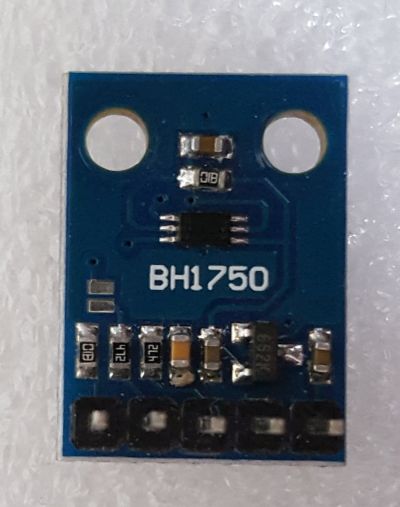
Der BH1750 ist ein Sensor zur Lichtstärkenmessung. Ich verwende den Sensor nicht diskret, sondern auf dem Board GY-302. Es wird über den I2c (Wire) Bus angesteuert. Da das GY-302 Board mit 5V betrieben wird, ist es zur Ansteuerung über den Arduino Uno geeignet.
View


Data
| GY-302 | |
|---|---|
| Messgröße | Beleuchtungsstärke (Luxmeter) |
| Sensor-Baustein | ROHM BH1750FVI |
| Messbereich | 1–65535 lx |
| Accuracy | 1 lx (Auflösung H-Modus); Messwert/Istwert 0,96–1,44 |
| Operating voltage | 5 V |
| Sensor voltage | 2,4–3,6 V |
| Schnittstellen | I²C (23h / 5Ch) |
| Abmessungen | 13,9 × 18,5 mm |
Circuit
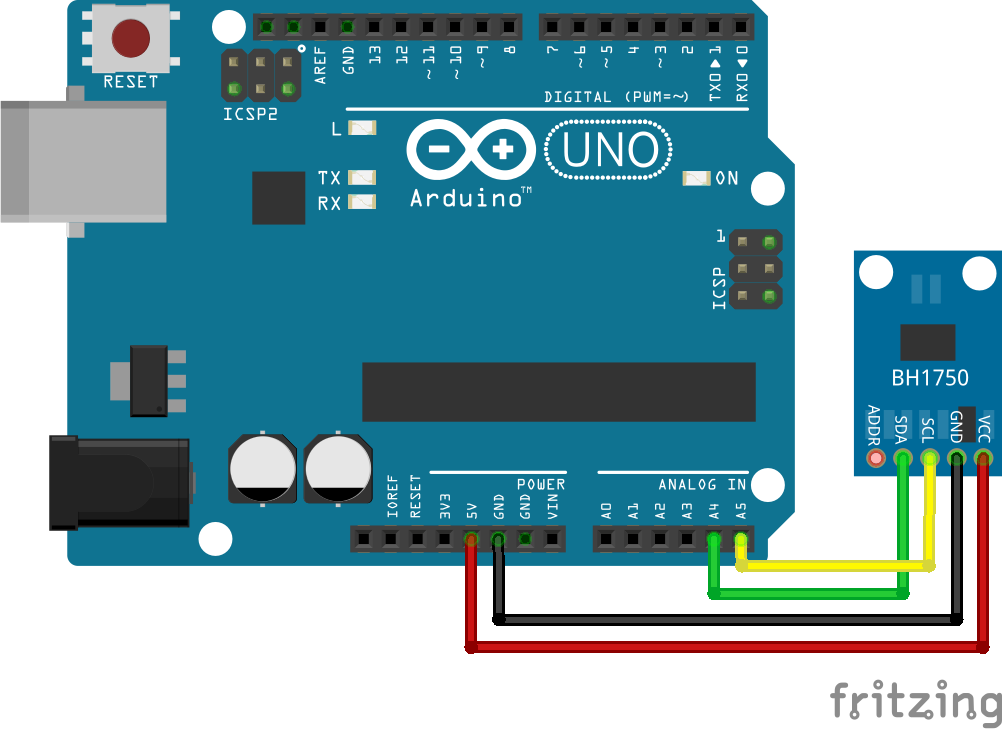
Die Schaltung ist ähnlich (siehe Skizze) wie bei anderen GY Boards. Das GY-302 bietet zusätzlich die Möglichkeit, zwischen zwei Bus-Adressen zu wählen. Dies ermöglicht es, 2 Chips der gleichen Art am selben Bus zu betreiben. Standardeinstellung ist Masse oder einfach unbeschaltet lassen.
Annexation
| Ground | Mass |
| Address | I2C Address Ground = 0x23 / +5V = 0x5C |
| Seventh-day Adventist | I2C SDA |
| SCL | I2C SCL |
| VCC | 5 V |
Applications
- Control of blinds or roller shutters
- Finding the brightest spot
- Light measurement in the office
- Zeitsteuerung nach Sonnenauf-/untergang
Programming
Library
On Github, there's a library that can control the sensor.
I used these for my tests. The entry in Git also has a detailed description of wiring and usage.
Die Bibliothek als Zip-Datei herunterladen und über den Bibliotheksmanager installieren (wie es geht, seht ihr hereLink status: OK).
Test programme
The library includes 3 test programs, I opted for BH1750testLink status: OK.ino decided.
Wie ein Testprogramm ausgewählt wird, findet ihr hereLink status: OK.
Path: BH1750->BH1750testLink status: OK.
Output
Die Ausgabe ist schlicht und zeigt den aktuell gemessenen Lux Wert.
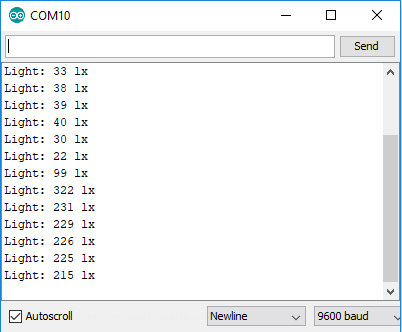
Leider kann ich mangels Referenzwert nicht vergleichen, wie genau die Messungen sind.
Problems
General I2C problems
Sources
| Date | Change | Author |
|---|---|---|
| 18.10.2026 | TablePress-Tabelle durch Datenblock aus dem Modell ersetzt | Suffocation |
| 08.10.2026 | Überschriften-Hierarchie korrigiert (H1→H2, Unterebenen eine Stufe tiefer) | Suffocation |
| 04.10.2026 | Rechtschreibung korrigiert: Tippfehler, Kommas | Suffocation |
| 03.10.2026 | Log-Liste eingefügt | Suffocation |
| 31.03.2018 | Post created | Suffocation |