Last Updated on 18. October 2026 by SuffocationLink status: OK
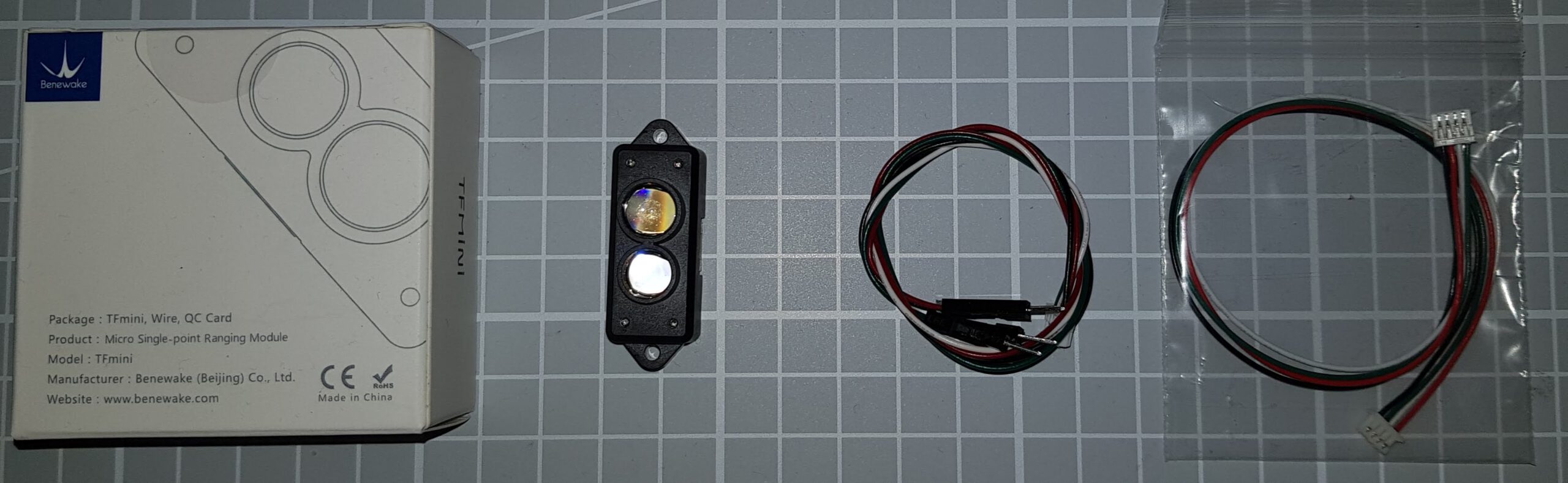
An dieser Stelle teste ich mal einen recht teuren Sensor für >36€, welcher die anderen Entfernungsmesser um „Längen“ schlägt ;). Der Sensor hat einen winzigen Anschluss (GH1.25-4p SMT type). Hierfür liegen zwei Kabel bei. Eines mit zwei GH1.25-4p Steckern und eines mit den gewohnten Pin-Headern, welches es ermöglicht, den Sensor direkt am Arduino zu betreiben. Der Sensor wird mit 4.6V – 6 V versorgt. Somit ist ein Einsatz an 3.3V-Mikrocontrollern nur über Logik-Level-Converter möglich.
Ich wollte eigentlich die I²C-Version testen, leider ist die UART-Version hier angekommen, weshalb ich diese nun hier vorstelle. Da ich keine Doku über die I²C-Version gefunden habe, bin ich mir immer noch nicht sicher, ob mit dem aktuellen Sensor nicht auch I²C möglich wäre. Wenn ihr mehr wisst, lasst einen Kommentar da. )
Facts
| TFmini | |
|---|---|
| Messgröße | Entfernung |
| Messprinzip | Lidar |
| Messbereich | 300–12000 mm |
| Accuracy | 1 % (unter 6 m), 2 % (6–12 m) |
| Öffnungswinkel | 2,3° |
| Frequenz/Wellenlänge | 850 nm |
| Operating voltage | 4,5–6 V |
| Stromaufnahme | ≤ 120 mW (≈ 24 mA bei 5 V) |
| Schnittstellen | UART |
| Abmessungen | 42 × 15 × 16 mm |
| Weight | 6,1 g |
| Description | Lidar-Entfernungssensor |
Connections
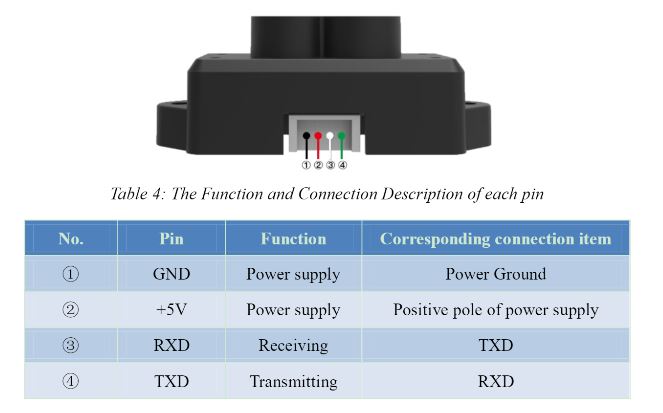
| Description | Worth |
| 1 mass | Ground |
| 2 Versorgungsspannung | 4.6V-6V |
| 3 UART Input | TXD |
| 4 UART Send | RXD |
Serial port data
| Description | Worth |
|---|---|
| Baudrate | 115200 |
| Datenbits | 8 |
| Stoppbits | 1 |
| Parity check | N/A |
Areas of application
- Distance measurement
- Kartographie (bis 12m)
- For drones for altitude determination
- Pass control
- Contactless triggering
Views
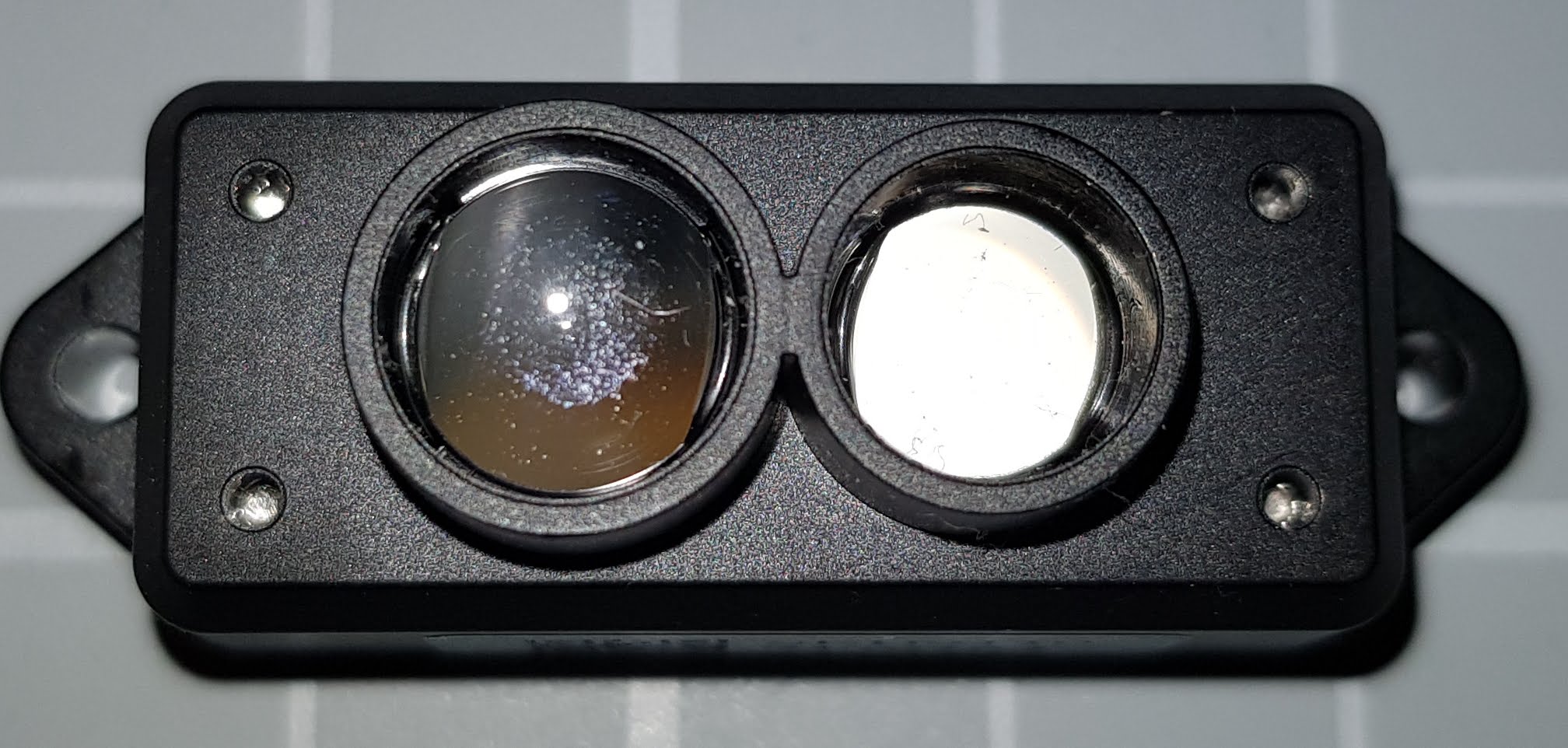
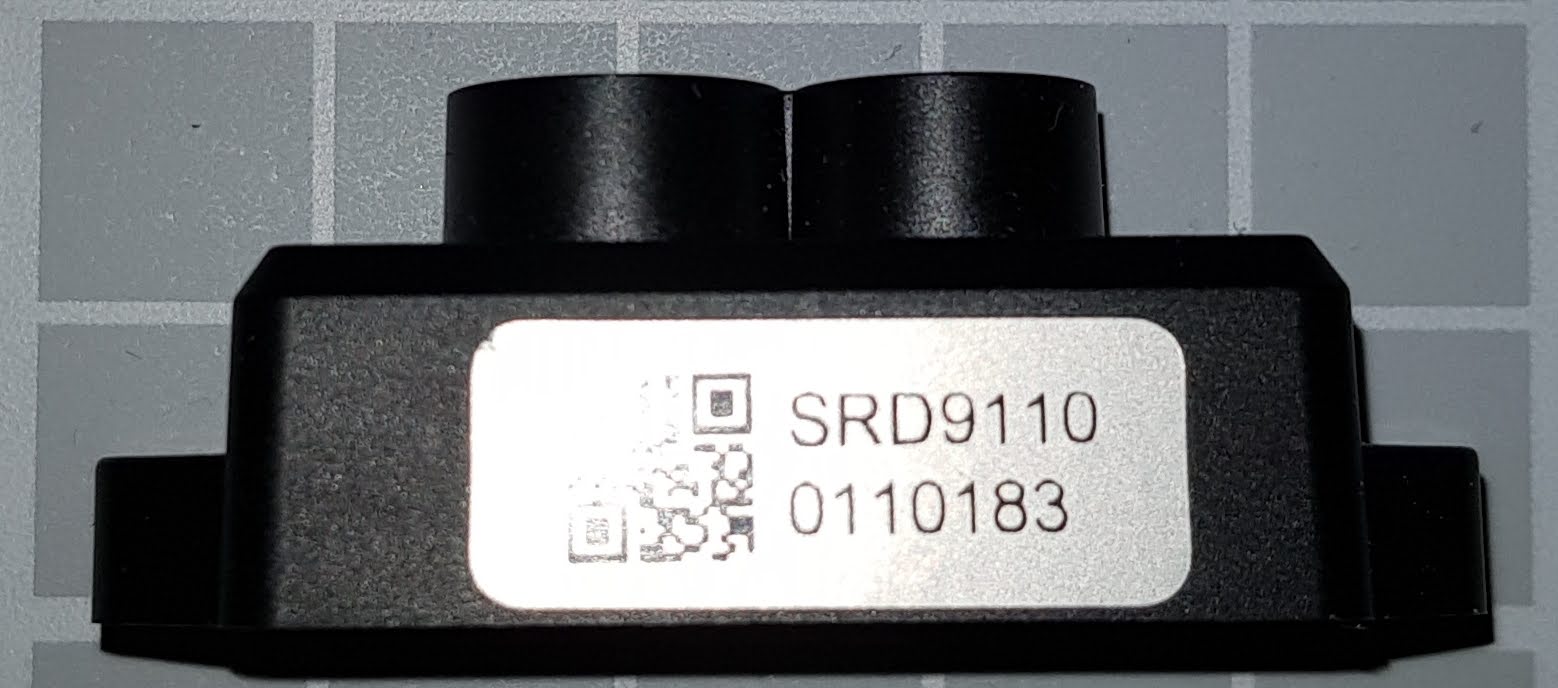
Programming
Libraries
Arduino
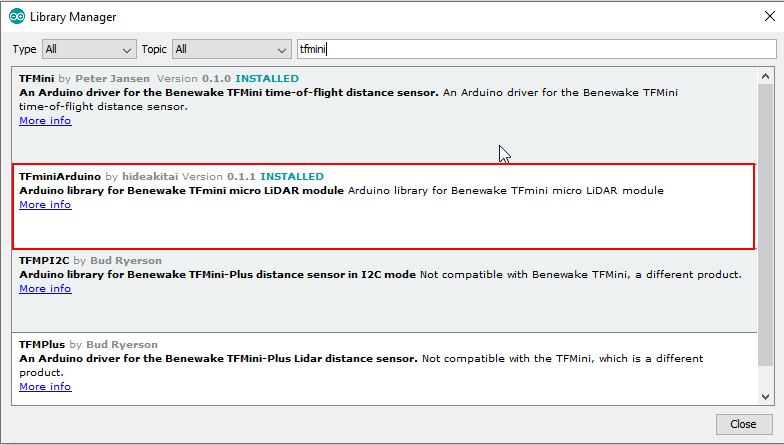
I'm LibrarianLink status: OK gibt es auch einige Bibliotheken für den TFMini. Mit der oberen von Peter Jansen hatte ich Probleme. Deswegen habe ich den zweiten Eintrag für meinen ersten Test gewählt.
Alternatives
Letztendlich habe ich die Lib von Peter Jansen noch zum Laufen gebracht. Somit hier der Link zur Bibliothek und zum Bugfix.
https://github.com/opensensinglab/tfminiLink status: OK
Bugfix: https://github.com/opensensinglab/tfmini/issues/9Link status: OK
ESPx
Die Bibliothek von Peter Jansen soll auch mit dem ESP funktionieren, allerdings müssen hierfür wohl alle Serial.print(ln) ’s aus der .cpp-Datei entfernt werden (See alsoLink status: OK). Ich habe das Projekt geforkt und sowohl die Printlines entfernt als auch den Bugfix für die Checksumme eingebaut. Unfortunately, I haven't been able to test it yet.
https://github.com/sfambach/tfmini_espLink status: OK
Wiring
Here is the wiring of the sensor via the UART. Unfortunately, the sensor looks a bit different from the original, so please note the pin assignment in the table below.
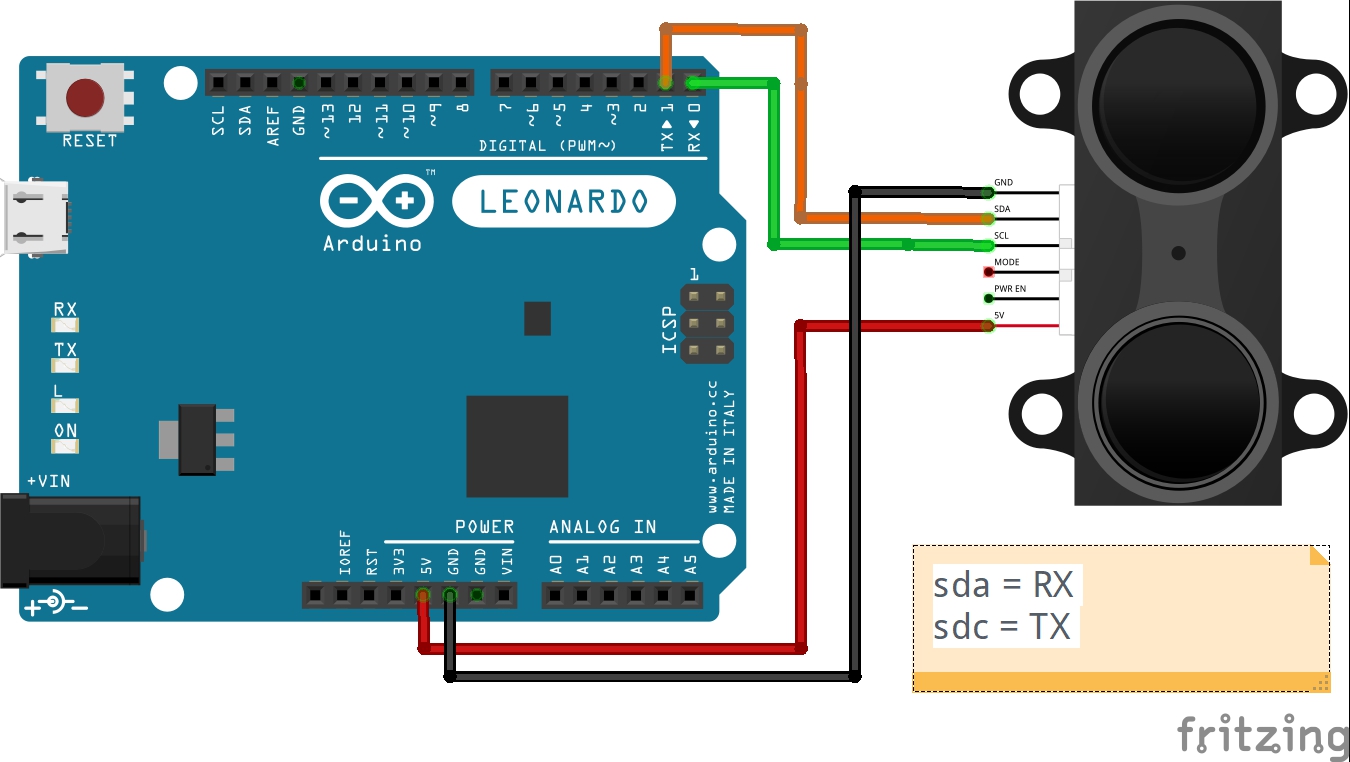
| Arduino | GY530 |
| 5V | Vehicle Identification Number |
| Ground | Ground |
| Pin D0 | TX |
| Pin D1 | RX |
Da die UART meist auch für Ausgaben auf der Console benötigt wird, bietet sich beim Leonardo/Uno-Board die Verwendung eines Software-UART an. Bei diesem können die RX/TX Pins fast frei gewählt werden, zum Beispiel Pin 10/11.
| Arduino | GY530 |
| 5V | Vehicle Identification Number |
| Ground | Ground |
| Pin D11 | TX |
| Pin D10 | RX |
Test programme
Testprogramm auswählen, kompilieren und auf den Arduino spielen. Evtl. die Pins und den seriellen Port umstellen.
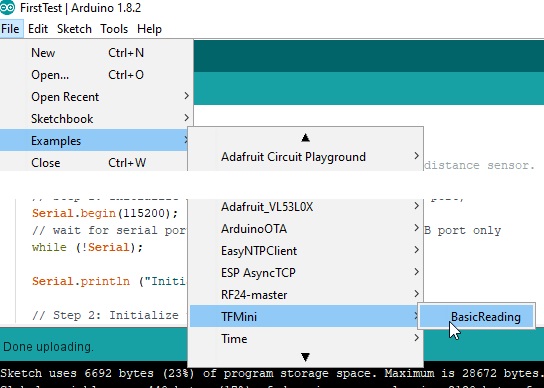
Here is my draft
Source code TFminiFirstTest.ino (GitHub GistLink status: OK)
/**
 * Example from the library.
 * I changed the two hardware serials to one software serial
 * More details under http://www.fambach.net/FTMini-Laser/
 *
 * The original lib to be no longer existing in Git, install it via Arduino Gui (keyword = tfmini, Author= hideakitai)
 *
 */

#include "TFmini.h"
#include <SoftwareSerial.h>

/**
 * Prepare the sensor
 */
SoftwareSerial mySerial(10, 11);
TFmini tfmini;

void setup()
{
    Serial.begin(115200);

    // init the sensor
    mySerial.begin(TFmini::DEFAULT_BAUDRATE);
    tfmini.attach(mySerial);
}

void loop()
{
        // get some data from the sensor
        if (tfmini.available())
        {
            Serial.print("tfmini ");
            Serial.println(1);
            Serial.print("distance : ");
            Serial.println(tfmini.getDistance());
            Serial.print("strength : ");
            Serial.println(tfmini.getStrength());
            Serial.print("int time : ");
            Serial.println(tfmini.getIntegrationTime());
        }
}https://github.com/sfambach/TF-Mini-LidarLink status: OK
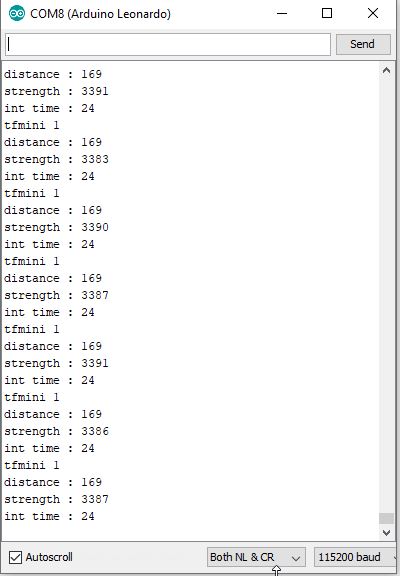
And this is what comes out on the console:
Problems
No connection
Check the wiring and simply swap RX and TX.
Miscellaneous
Telegrammaufbau
[0x59, 0x59, Length low, Length high, Strength low, Strength high, reserved, Signal Quality, checksum]
- Jedes Telegramm beginnt mit zwei Byte 0x59 und endet mit der Checksumme
- Entfernung = (Länge high << 8) + Länge low.
- Stärke = (Stärke high << 8 )+ Stärke low.
- Reserviert = heißt so viel wie nicht genutzt.
- Signal Quality = 0, 255.
- Für die Checksumme werden alle Bytes ausschließlich der Checksumme und des Headers summiert ( Länge low + Länge high + Stärke low + Stärke high + reserviert + Signal Qualität).
Test programmes (UPDATE 19.07.2021)
Ich habe ein Git-Repository mit ein paar Testprogrammen angelegt, welche die Inbetriebnahme erleichtern sollen.
https://github.com/sfambach/TF-Mini-LidarLink status: OK
Fritzing Parts
There's a Fritzing part on Git, but unfortunately, it doesn't quite fit.
https://github.com/PulsedLight3D/LIDAR-Lite-Fritzing-PartLink status: OK
Conclusion
Der Sensor funktioniert und hat eine unschlagbare Reichweite. Leider nimmt er es nicht so genau und der Preis ist auch mit ~36€ sehr hoch. Wer jedoch über die Entfernung von 4 Metern der Sonarsensoren hinaus will und schnelle Messungen benötigt, findet mit diesem Sensor einen Verbündeten.
Similar
- GY-530 VL53L0X Laser RangefinderLink status: OK
- RC car with PS2 controllerLink status: OK
- Arduino – HC-SR04 EntfernungsmesserLink status: OK
- Controlling the US-100 distance sensor with a Raspberry Pi 3Link status: OK
- US-100Link status: OK
- HC-SR04 Distance SensorLink status: OK
- US-015Link status: OK
Sources
Manufacturer's websiteLink status: OK
Technical Support for TF-MINILink status: Broken
Data sheetLink status: OK
FritzingpartLink status: OK
TFMini on GitLink status: OK
TFMini Library with ESP AdaptationLink status: OK
Arduino LibraryLink status: OK
https://learn.sparkfun.com/tutorials/tfmini—micro-lidar-module-hookup-guide/allLink status: OK
https://github.com/opensensinglab/tfmini/issues/6Link status: OK
| Date | Change | Author |
|---|---|---|
| 18.10.2026 | TablePress-Tabelle durch Datenblock aus dem Modell ersetzt | Suffocation |
| 10.10.2026 | Gist-Einbettung durch Code-Block ersetzt (Gist als Quelle verlinkt) | Suffocation |
| 08.10.2026 | Überschriften-Hierarchie korrigiert (H1→H2, Unterebenen eine Stufe tiefer) | Suffocation |
| 04.10.2026 | Rechtschreibung korrigiert: Tippfehler, Kommas, Groß-/Kleinschreibung, Bindestriche, Formulierungen | Suffocation |
| 03.10.2026 | Log-Liste eingefügt | Suffocation |
| 30.04.2020 | Post created | Suffocation |